SEAWEEDS: Michelle Sui’s Live Score Concert at Project Blank
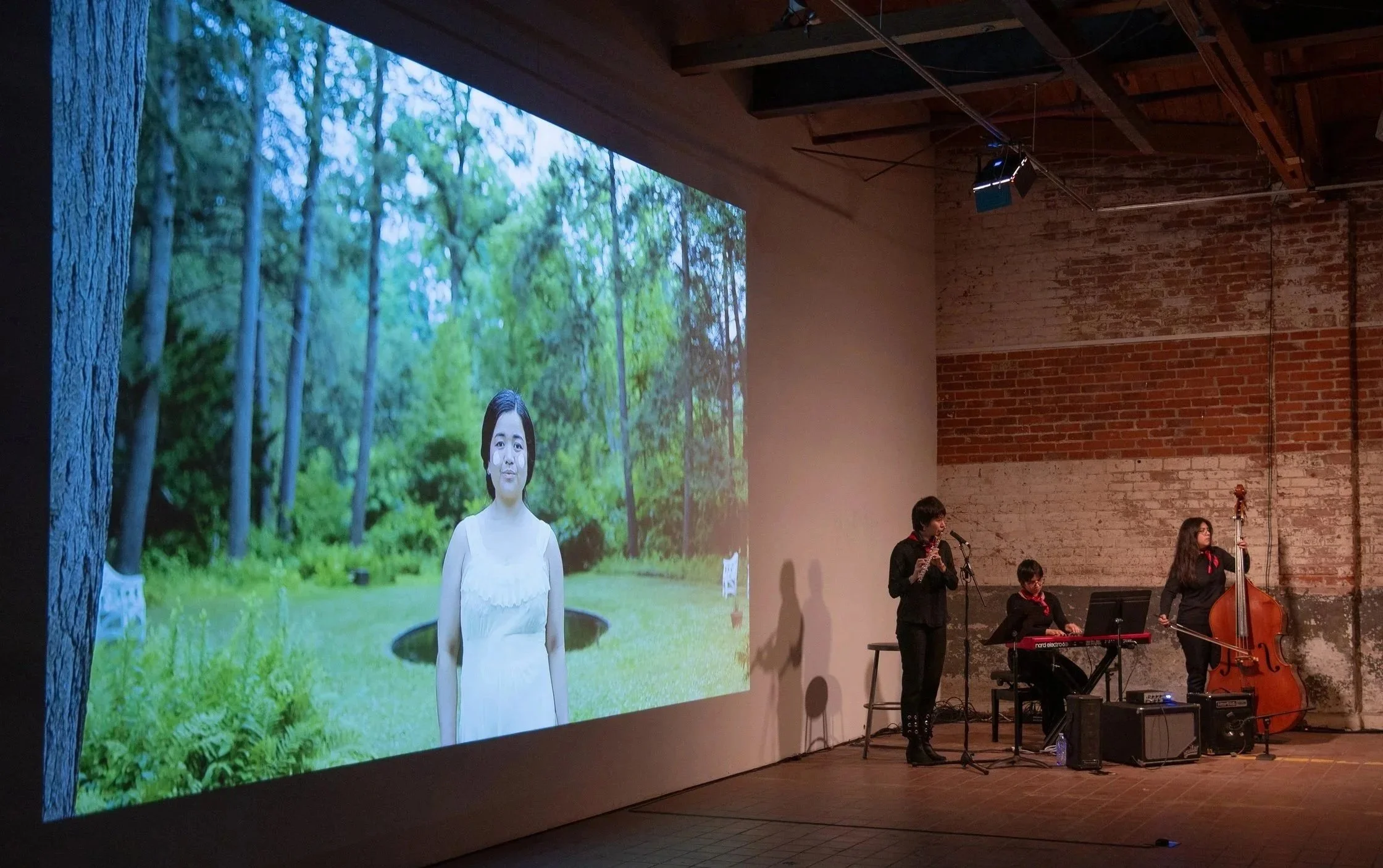
Photo credit Kelly Weaver and Robbie Bui.
When the final reel of a 1922 film disappears, it leaves behind more than a narrative gap. It raises the question: what else could the ending have been?
Michelle Sui takes that question seriously. Her newest work, Seaweeds — presented as part of Project Blank’s Salty Series program at Bread & Salt — reimagines the lost ending of The Toll of the Sea, the early Technicolor silent film starring Anna May Wong. Yet “reimagining” feels insufficient. Sui uses the missing reel as a point of departure, constructing a hybrid performance that unsettles the boundaries of cinema, theater, and live score while asking who gets to reshape inherited stories.
Inside the Room at Bread & Salt
Bread & Salt was already humming when the lights dropped. A flutist, pianist, and cellist began with fractured, off-center melodies.
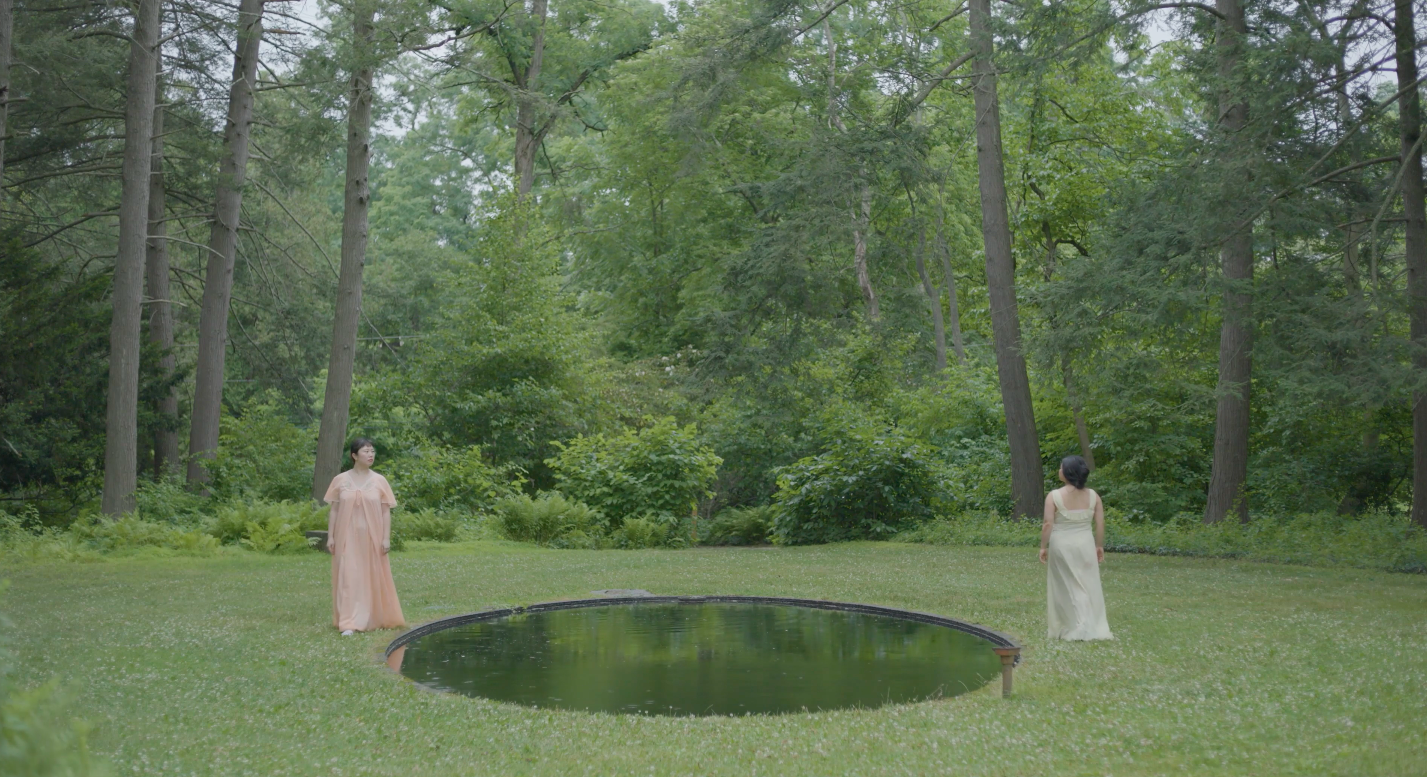
On screen, the film shifted in tone: humorous, melancholic, disorienting, occasionally tender. It nodded to The Toll of the Sea through silent-film intertitles, lighting, and framing, but Sui wasn’t reenacting the original. Instead, she worked within the film’s visual vocabulary, pressing against its absences.
The protagonist drifted between waiting and wandering. Time blurred. Audio clips suggested the 1930s or ’40s; the imagery gestured toward Paris, Mexico, and places less fixed than imagined. The instability felt deliberate.
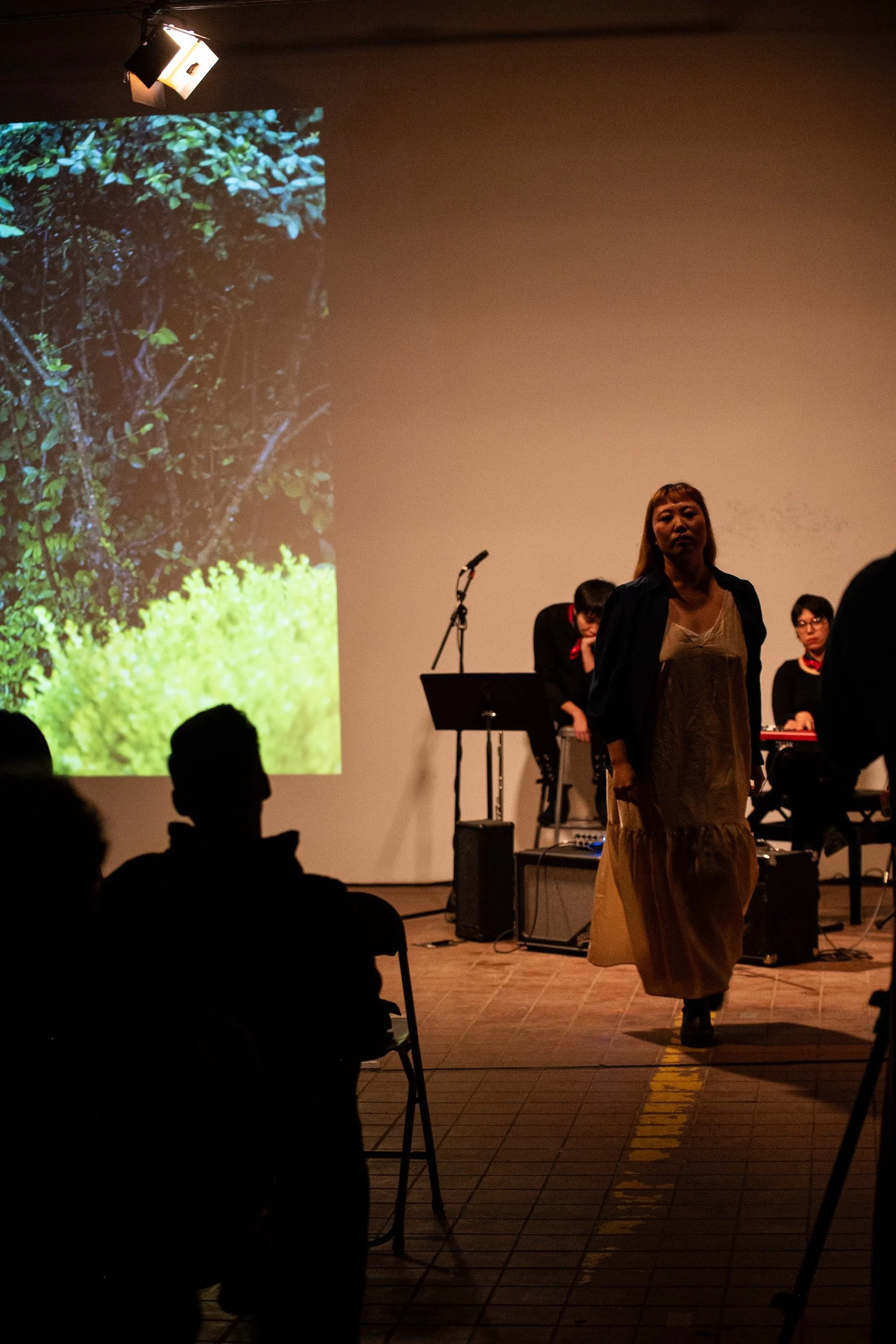
Midway through the performance, the boundary between screen and room thinned. Sui sang from the audience, then fell silent. During a dancing sequence on screen, she rose and mirrored the choreography in real time, collapsing the distance between performer and audience. In another moment, the cellist lifted tap shoes and created the missing sound live, granting sonic weight to what silent film could only imply.

Where the Film Ends, Sui Begins
To understand Seaweeds, it helps to return briefly to The Toll of the Sea.
In its restored ending, Anna May Wong’s character, abandoned by the man she loves after relinquishing their child, walks into the ocean and dies. The image has endured as emblematic tragedy.
Not interested in repeating that ending, Sui told me:
“It’s a sad, tragic story where the Asian American protagonist throws herself into the sea and commits suicide in service to this man… We’ve seen that story many times before. I wanted to see where we could go if the ending wasn’t based in trauma.”
Rather than restaging the suicide, Sui takes a different path. Her protagonist searches, shifts, wanders, remains in motion.
The move carries historical weight. Anna May Wong remains an icon, but her career unfolded within strict racialized limitations. She spoke openly about her frustration with the roles she was allowed to play. The restored reel reminds us that archives are not fixed.
“What does it mean,” Sui asked, “if we can just come in and keep rewriting the ending to these stories? Who gets to rewrite them?”
Courtesy of the Artist
Refusing Resolution
If Seaweeds were only a commentary on a missing reel, it would already be compelling; however, the gesture resonates beyond a single film. For more than a century, Western opera and cinema have returned to the spectacle of Asian female sacrifice — from Madama Butterfly onward. Sui uses that familiarity as a starting point.
“As an Asian American artist, we have her to look up to as an icon,” Sui said. “I’m more interested in opening up some alternate realities — what if she had the opportunity to play roles she really wanted?”
That is the question Seaweeds tries to answer.
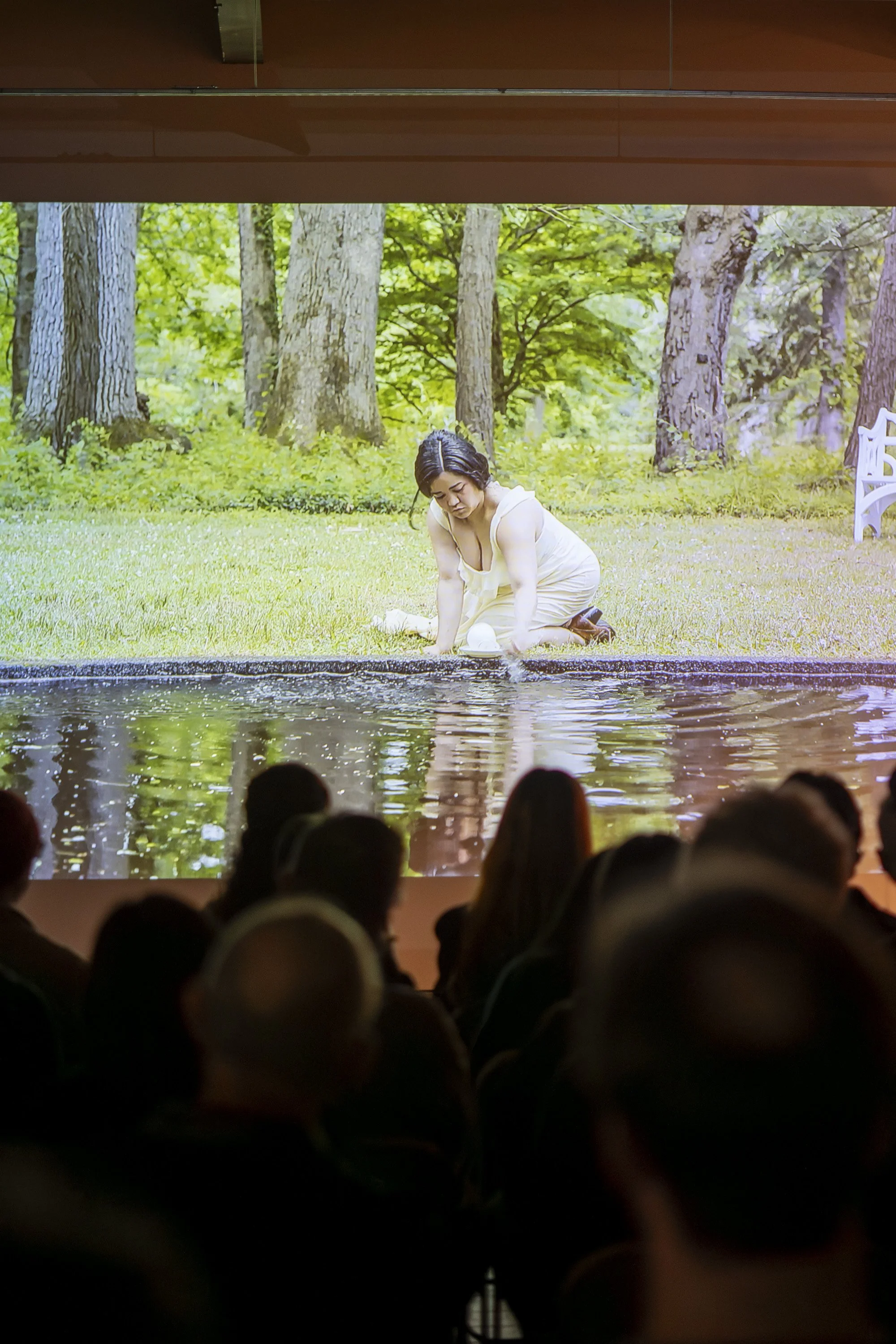
Sui described the piece as a practice of presence.
“My work is really about being present with the audience,” she said. “It’s not easy. You have to be in your body, willing to improvise and go off script if the moment needs it.”
Although the score is structured, durations expand and contract in response to the room. The performance lives between archive and improvisation, asking what it might look like to remain visible without knowing how the story ends.
Working in the Gaps
Throughout our conversation, Sui kept returning to the idea of “gaps” — the spaces within the film that interested her more than its plot.
The project began with footage shot by a pond in New York, echoing the atmosphere of the original. From there, she developed a movement score with her actor and layered additional locations and sound.
“It’s not really about adapting the story beat by beat,” she told me. “It’s about whatever in the film — the colors, the gaps, the things that are missing — sparks something.”
The body connects these elements. Sui’s musical practice begins physically; she teaches voice through embodied techniques, and that approach carries into performance. It informs her decision to sing from the audience, slipping between observer and protagonist, while the musicians move in and out of alignment with the screen, at times activated, at others suspended.
In Conversation with Michelle Sui
Seaweeds is still in development. When we spoke over Zoom, Sui described the Bread & Salt presentation as an early iteration.
“I’m really happy to have done that show,” she said. “I think I’m still processing it. That was one of the first rounds of workshopping the music.”
The 30-minute video shown at Bread & Salt is one iteration within a longer trajectory. More videos are planned, alongside an expanded score.
Presence and Audience:
In a cultural moment marked by divided attention, Seaweeds demands sustained focus.
“It’s never just another show,” she said. “Everyone took care to make this work. We could have been somewhere else, on our phones. But we were together.”
The performance depends on that shared presence. Its improvisational edges sharpen in relation to the room, asking the audience to remain attentive to small shifts in sound, movement, and silence.
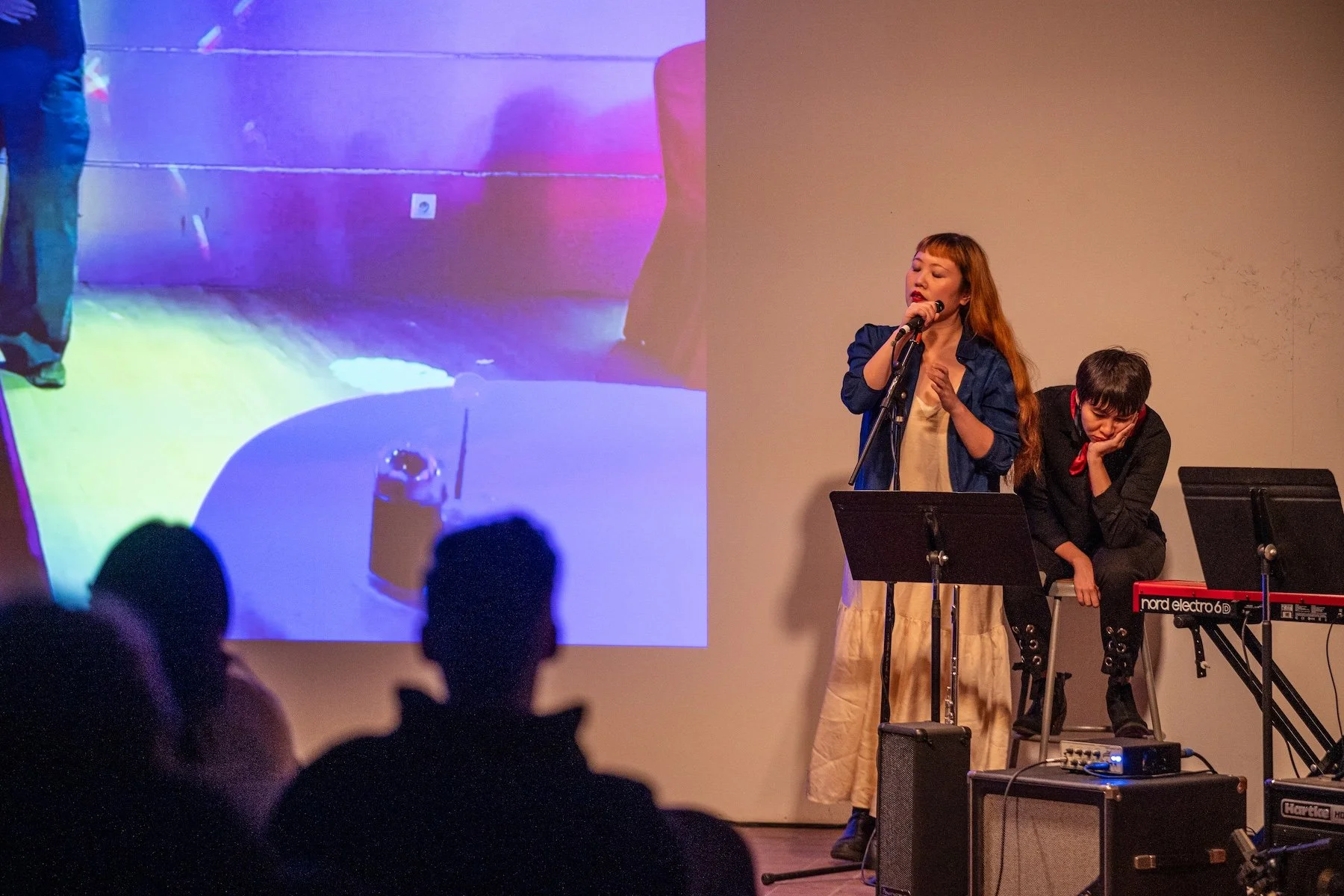
Photo credit Kelly Weaver and Robbie Bui.
What She Hopes Audiences Carry
Sui hesitated before answering.
“I don’t know,” she said quietly. “Everyone will have their own reaction. But I hope it opens up space for curiosity—for imagining things differently.”
A Note to Young Artists
Before we ended, I asked what she would tell someone trying to enter this field.
Her answer was simple:
“Do it. Even if it’s hard. And don’t spend a lot of time trying to explain yourself to people. If your art doesn’t fit neatly into a brand or a marketable box — good. Art isn’t a commercial. Listen to your instincts. Don’t be discouraged when people tell you that you don’t fit.”
Seaweeds in the Context of Project Blank
Project Blank has become one of San Diego’s most consistent homes for experimental performance, presenting work that resists easy classification.
By returning to The Toll of the Sea, Sui loosens its inherited finality. The performance does not resolve film history or representation; it unsettles them. Rather than offering closure, it holds open the space where another ending might have been imagined.
Project Blank’s season continues through May 2026. If Seaweeds is any indication, the most compelling work ahead may not be the stories we already know — but the ones we finally dare to rewrite.
Credits & Artist Links
Thank you Michelle Sui for supporting the making of this article
IG @michelle.sui
Photo credit Kelly Weaver, Robbie Bui and Reb Rich.
Seaweeds (2025)
A live score
Performed by Leanna Keith (flute), Sofia Leal (double bass), Lorraine Oliveira (keys), and Michelle Sui (voice) with the blue choir: Michelle Lou, Sivan Silver-Swartz, and Jeremy Wei-Rosenstock
L’heure bleue
Starring Sherwood Chen, Nazlı Dinçel, Carissa Matsushima, Christina Ree, Jeanne Tara and Michelle Sui
Written, Produced, and Directed by Michelle Sui
Director of Photography: Alex Takats
Paris Unit: Céline Brunko
Tijuana/San Diego Unit: Lev Kalman
Edited by Jorge Ravelo & Lev Kalman
Production Assistants: Jafet Arzate, Sarah Bogner, Dana Del Castillo, Peter Moua, Cléo Xia
Developed in residency at Cité internationale des arts in Paris, France. Filmed on location in Annandale-on-Hudson, New York - Paris, France - Tijuana, Mexico - San Diego, California.
Special thanks to Julienne Mackey